
ONE YEAR ADVANCED DIPLOMA IN INTERNATIONAL HUMANITARIAN LAW
About the Programme
International Humanitarian Law which governs situations of International and Internal armed conflicts has assumed considerable significance in different parts of the world during the recent past on account of proliferation of armed conflicts and armed violence. International Humanitarian Law attempts to mitigate the sufferings brought about by armed conflicts and wars by ensuring protection to defenseless victims of armed conflicts and also by regulating and restricting means and methods of use of force. The possibility of prosecuting violators of humanitarian law - war criminals - from recent armed conflicts and the possibility of creation of a permanent International Criminal Court have drawn increasing attention to Humanitarian Law issues during the last few years.
The Diploma in International Humanitarian Law is intended to provide an opportunity to people working in various fields who are either dealing with situations of international or internal armed conflicts in their professional capacities or who are interested in knowing more about regulation of armed conflicts.
The target group of learners include Armed and Paramilitary and Police Forces, NGOs associated with human rights related work, human rights activists, legal professionals such as lawyers, law officers working for the Government, Judges, Teachers and candidates of Law, Political Science, Defense& Military Studies and Human Rights.
Eligibility :
a. Bachelor’s Degree or an equivalent Degree in any discipline from any recognized University; or
b. Candidates who complete three years of their 5-Year Integrated Degree Programme are also eligible to apply; or
c. Candidates appearing for the final year examination of Graduation / Engineering are also eligible to apply.
Admission Procedure
Direct Admission subject to fulfilment of the eligibility criteria.
Duration, Continuation and Termination
The duration of the programme is one year and the maximum period for completion of the programme is two years including the year of admission.
Every candidate admitted to the course shall pay the prescribed fees at the time of admission. If a candidate is required to continue the course beyond the academic year because of his/her non- fulfilment of the prescribed requirements for the award of the Advanced Diploma, he/she shall pay the Continuation Fee to continue their course in the subsequent year.
The marks secured in the papers already appeared by the candidate shall be carried forward during the span of the eligibility for the programme.
After completion of the maximum period, if the candidate fails to fulfill all the requirements for the award of the Advanced Diploma, the admission stands automatically cancelled. In such cases they need to enrol afresh for the programme.
Fee Structure :
Course fee:
- Rs. 12,000/- p.a. for Indian Nationals (5% fee concession to the candidatesbelonging to SC / ST / PWD Category)
- US$ 240 for candidates from SAARC Countries
- US$ 350 for candidates from other Countries
- Repeat examination / Supplementary Examination fee : Rs.500/- per paper
- Continuation fee beyond the minimum duration of the course till the maximum period : Rs.3,000/- per year
- Re-evaluation Fee : Rs. 1,000/- per paper
- Boarding & Lodging charges at campus (subject to availability) during classes / exam will be extra as per the University Rules.
- Convocation fee will be charged separately as per the University Rules.
Note: The University reserves the right to revise the Fee structure from time to time.
Course Structure
| Subject Code | Subject | Marks | Credits |
|---|---|---|---|
| 1.1 | Introduction to International Humanitarian Law | 100 | 4 |
| 1.2 | Protection of Victims of War and Armed Conflicts | 100 | 4 |
| 1.3 | Limitations on Means and Methods of Warfare | 100 | 4 |
| 1.4 | Implementation of International Humanitarian Law | 100 | 4 |
Conduct of the Programme
The Advanced Diploma Programme will be for a period of one year. Personal Contact Programme(PCP) sessions will be held twice in a year by the subject experts. The candidates can contact / communicate through email with the subject experts for queries, if any, on the concerned subject. Relevant course material will be uploaded on the website and can be accessed through their login id.
PCP sessions will be conducted for four days twice in a year at Hyderabad by the subject experts. Suggested reference guidance would be provided at the contact sessions. Each subject shall consist of 12 teaching hours which will come to 48 teaching hours for the total programme.The recorded videos of the classes will be uploaded on the dedicated website and can be accessed by the candidates through their login ids.Attendance at the PCP is not compulsory but candidates are advised to attend the classes as they are important to understand the subject and successfully complete the course.The learners are also expected to put in at least 30 hours of study for each credit.
The website will be the main delivery system in terms of updating information on the subject. The access to the website will be deactivated after the completion of the minimum duration and will be revived on the payment of the continuation fee.
Academic Calendar (Tentative)
Admission Process From February to June every year
| S.No. | Name of the Activity | Tentative months | |
|---|---|---|---|
| From | To | ||
| 1 | Distribution of course material | July | August |
| 2 | Personal Contact Programme(First Round) | September | October |
| 3 | Personal Contact Programme (Second Round) | February | March |
| 4 | Examinations | May | June |
| 5 | Declaration of Results | July | August |
| 6 | Repeat / Supplementary Examinations | October | November |
Note : The PCP Sessions (classes) will be conducted in blended mode (online / physical) at NALSAR University of Law, Hyderabad. However, the examinations will be conducted physically at Hyderabad only.
Evaluation Scheme& Award of Advanced Diploma
Examination
There will be one annual examination for each subject. Each paper shall carry 100 marks.
Award of Grades
The performance of all the candidates in all courses shall be evaluated on a 10 point scale with corresponding grade values as mentioned below:
| Percentage of Marks | Grade | Grade Value |
|---|---|---|
| 90 and above | O+ (Exceptionally Outstanding) | 10 |
| 85 – 89 | O (Outstanding) | 9 |
| 80 – 84 | E+ | 8.5 |
| 75 – 79 | E (Excellent) | 8 |
| 70 – 74 | A++ | 7.5 |
| 65-69 | A+ | 7 |
| 60-64 | A | 6.5 |
| 55-59 | B+ | 6 |
| 50-54 | B(Pass) | 5.5 |
| Below 50 | F(Fail) | 0 |
Calculation of CGPA
Cumulative Grade Point Average (CGPA) is arrived at by dividing the sum of the products of Grade Values and the Course Credits in each subject by the total number of credits in all the subjects.
A candidate to be successful should obtain a minimum of 50% marks or the equivalent grade, i.e., B in every subject. However, the candidate who fails to obtain the minimum grade (i.e., B) shall be given chance(s) to re-appear for the examination whenever the same is conducted till the completion of the maximum period, i.e., two years from the date of admission on payment of repeat / supplementary examination feeand the continuation fee as prescribed. No candidate who has cleared the subject by securing 50 marks or above is allowed to re-appear in the examination for improving the marks / grade.
Rounding off and Award of Grace Marks
In case a candidate obtains fractional marks, the fraction will be rounded off to the nearest whole number.
The Course Coordinator with the approval of the Director, DDE may add FIVE grace marks in total for all the subjects to enable a candidate to pass the examination. The said provision will not be applicable in case of re-evaluation and/or for improvement of grade.
Provided that under no circumstances, a candidate shall be granted more than five grace marks to be distributed in all subjects.
Award of the Advanced Diploma Certificate
A candidate to be eligible for the award of the Advanced Diploma in International Humanitarian Law should secure 50% marks or ‘B’ grade in all the subjects obtaining atleast CGPA of 5.50 out of 10.00.
A candidate admitted to the program has to complete all the prescribed requirements within a maximum period of two years from and including the year of admission in order to be eligible for the award of the Advanced Diploma.
Procedure for Re-counting / Re-evaluation
The candidates desiring of re-evaluation have to apply in writing along with the re-evaluation fee within 15 days from the date of declaration of results.On the receipt of the request for re-evaluation, the paper would be sent to subject expert other than the evaluator and the results of the same will be communicated within 45 days. A change in the original score shall be made only when, upon re-evaluation, the change is FIVE marks or more. The Re-evaluation result is final and there will be no further appeal to the same.
No candidate who has cleared the subject by securing 50 marks or above is allowed to re-appear in the examination or apply for re-evaluation for improving marks/grade.
The recounting of the paper would be done without collecting any fee but on the written request to the Director, DDE by the candidate. The change, if any, shall be incorporated accordingly.
Misconduct Rules
The Vice-Chancellor on the report and recommendation of the Course Co-ordinator can cancel the registration of a candidate and also debar them from examinations and further enrolment if he or she is found to be indulging in abusive, unruly behavior with the faculty or staff of the University. Such behavior will also include abusive mails, phone calls or defamatory tweets / posts / blogs etc.
The NALSAR University Academic Mis-Conduct Regulations, as approved by the Executive Council of the University will apply suitably for the candidates enrolled for this programme.
Refund of Fee in case of withdrawal of admission
a) In case of withdrawal within 15 days from the closure of the admission, 10% of the course fee paid shall be retained by the University towards administrative charges;
b) In respect of candidates who withdraw their candidature after 15 days from the closure of admission, total course fee paid by the candidates shall be retained by the University.
c) All other fee other than course fee, once paid is non-refundable.
Note:The University reserves the right to modify the admission process, fee structure, course structure, course content, the evaluation scheme and other Rules from time to time.
ONE YEAR ADVANCED DIPLOMA IN INTERNATIONAL HUMANITARIAN LAW
In-House Faculty :
Prof. (Dr.) V. Balakista Reddy
Professor of International Law and Registrar,
Head, Centre for Aerospace and Defence Laws (CADL)
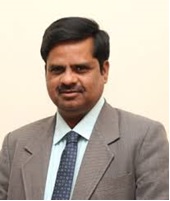
Dr.V.Balakista Reddy obtained his LL.M in International Law from Osmania University and M. Phil. and Ph.D. in International Air and Space Law from Jawaharlal Nehru University (JNU), New Delhi. He has more than 15 years of Teaching and Research experience.
An internationally recognized expert in Air and Space Law, Dr. Reddy presented papers on “Aerospace Technologies and Problems of Third World Countries” and “The Application of Satellite Technologies in Civil Aviation: Emerging Legal Issues” at the UNISPACE-III conference held at Vienna, Austria. He also participated and presented a paper on International Trade Law and Developing Countries at the UNITAR/WTO Workshop on International Trade at UN Headquarters, New York. Besides, above UN Conferences, he has also participated and presented papers in many National and International conference and workshops.
A prolific writer, Dr. Reddy has contributed extensively to various national and international journals on different facets of International law. His books on, (1) Air Law and Policy in India (2) Recent Trends in International Space Law and Policy and (3) Emerging Trends in Air and Space Law, (4) Space Law and Contemporary Issues have won international acclaim. He is Visiting Faculty to many Universities in India and abroad.
At present, he is engaged in various prestigious projects and assignments, which include the WTO and India: Issues and Challenges, Drafting of Model Space Legislation for India and Sensitization Programme on WTO/GATS and Globalization of Legal Profession: Opportunities and Challenges for Indian Legal Fraternity.
Beside, supervising of M. Phil and Ph.D. students, Dr. Reddy teaches L.L.B. and LL.M. Courses at NALSAR, which include International Law, International Trade Law, International Air and Space Laws, International Intellectual Property law, International Banking and Insurance Laws, Comparative Corporate and Competition Laws, International Environmental Law, and International Humanitarian and Refugee Laws.
In-House Faculty :
Mr.Syed Ashfaq Hussain
Assistant Professor, NALSAR
LLM, International Law
Prior to joining NALSAR he was teaching at Delhi University, NLS Bangalore and at College of Law, Hannam University, South Korea.
Visiting Faculty :
Prof. P.V. Rao
Visiting Faculty
M.Phil., Ph.D. (JNU)
Prof. P.V. Rao is an Emeritus Professor of Political Science – UGC and the Former Director of Centre for Indian Ocean Studies, Osmania University, Hyderabad and Visiting Professor, NALSAR since 2010. He obtained M.A. in Political Science from Osmania University, with a first division; M.Phil and Ph.D in European Studies from School of International Studies, JNU. He was awarded the British Council Scholarship at London School of Economics for research; Fulbright Post-Doctoral Fellowship at the School of Advanced International Studies (SAIS), Johns Hopkins University, Washington; Ford Foundation Fellowship at Bandarnaike International Centre, Colombo.
He teaches Research Methodology; WTO Dispute Settlement, (ITBL); Regional Trade Agreements (SAARC); International Investment and Infrastructure Course; International Relations; International Law of the Sea; and India and South Asia atNALSAR.
Rao’s areas of research interest include Regional Trade Systems; SAARC; Maritime Studies; South & Southeast Asian political and economic relations.
Rao published six books including Indian Ocean: Annotated Bibliography; Regional Cooperation in Indian Ocean; India and Indian Ocean; India and Australia, New Horizons; India and ASEAN: Partners at Summit; Directory of UGC Area Study Centres.
Rao is the founder Editor of Indian Ocean Survey, a biannual international journal, now being published by the Routledge, UK. He published over forty research articles in Indian and foreign journals.
He is a Member, UGC Committee on Area Studies; Member COM, Indian Ocean Research Group, Perth. He regularly lectures at College of Air Warfare; college of Naval Warfare and several other academic institutions.
Visiting Faculty :
Dr. Benarji Chakka
Professor
Interim Dean, Alliance School of Law, Bangalore
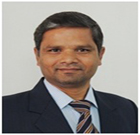
Dr. Benarji Chakka graduated from Andhra University, with B.A.L and LL.B degrees. He holds an LL.M. degree from the School of Oriental African Studies (SOAS) London, and has M. Phil., and a Ph.D. degrees in International Law from Jawaharlal Nehru University (JNU), New Delhi, India. He completed his Postgraduate Certificate Course in Learning, Teaching and Research in Higher Education and Postgraduate Diploma in French Language, Literature and Culture from the National University of Ireland (NUI), Galway, Republic of Ireland. He has also obtained a PG Diploma in Industrial Relations, Personal Management and Labor Welfare.
He was a British Chevening Scholar at SOAS in 2015-16. Prior to this, he worked as Associate Professor of Law at Symbiosis Law School, Hyderabad; Associate Professor of Law and Registrar at National Law University and Judicial Academy, Assam (NLUJAA); Lecturer at the School of Law, National University of Ireland (NUI), Galway; and was a Legal Adviser to the International Committee of the Red Cross (ICRC), Regional Delegation for South Asia, New Delhi, India. He was a Research Associate at the Indian Society of International Law (ISIL). He has published research articles and three books in the field of International Humanitarian Law and International Aviation and Space Law. He has presented several research papers in national and international conference and workshops and was invited by various Law Schools and Universities in India to deliver lectures. He was also invited by UGC Academic Staff colleges in India to deliver lecturers in the UGC Refresher and Orientation Programs. He was associated as a judge with Manfred Lachs International Space Law Moot Court Competition for Asia-Pacific Round, Stetson International Environmental Law Moot Court Competitions, Henry Dunant Memorial Moot Court Competition in India and South Asia Region, Price Media Law Moot Programme organised by the University of Oxford. He participated as a researcher at the Centre for Studies and Research in International Law and International Relations in 2015 at The Hague Academy of International Law.
Dr. Chakka has taught undergraduate and postgraduate students of Law in areas of Public International Law; International Humanitarian Law; International Human Rights Law; International Criminal Law; Human Rights and Business; International Aviation Law and Space Law; Criminal Law; Jurisprudence and Indian Legal System; Legal Methods and Legal Research.
He is an Executive Council member of the Indian Society of International Law, member of the European Society of International Law, and a member of the All India Law Teachers Congress.
He is an active researcher in the fields of international law and his research interests are in the areas of Public International Law; International Aviation and Space Law; International Humanitarian Law; Human Rights Law; International Criminal Law; Transnational Organized Crime and Money Laundering; International Criminal Tribunals; Human Rights and Business; International Law of Maritime Piracy Law; Development and Globalization; Colonialism and International Law; and Transitional Justice. Click the following link to see his publications - https://law.alliance.edu.in/asl/faculty_profile.php?id=359
Directorate of Distance Education
NALSAR University of Law
Justice City, Shameerpet, Medchal District,
Hyderabad - 500101, Telangana, India.
Director (Officiating)
Professor Srikrishna Deva Rao, Vice-Chancellor,
NALSAR University of Law
Ph : +91 40 23498102
Email : vc@nalsar.ac.in
Administrative Contact
Ms. B. Nagalakshmi
Assistant Registrar
Ph : +91 40 23498402 / 404 ; Fax: +91 40 23498403
Email : ddeadmissions@nalsar.ac.in
Mobile : 70755 89600
Postal Address
Directorate of Distance Education
NALSAR University of Law
Justice City, Shameerpet, Medchal District,
Hyderabad - 500101, Telangana, India
Subscribe
