
Five Day Online Course on 'Forensics in Nutshell'
(Jointly offered by NALSAR University of Law and Truth Labs)
About the Course
Forensic science is becoming more and more important in both our daily lives and the legal system. Forensic science is vital to the criminal justice system as it offers unbiased, objective and scientific proof to solve crimes, identify culprits, and exonerate the innocent. Its significance stems from its ability to link suspects to crimes, provide realistic descriptions of crime scenes, support accurate and just legal outcomes through techniques like DNA analysis, ballistics, and digital forensics.
Course Objectives & Outcome
The 5-Day online program will introduce all branches of forensic science to various stakeholders such as Corporates, Students, Lawyers and particularly Law enforcement agencies. The program will be helpful to identify key challenges in all areas of forensic science and by the end of the program participants would be better equipped in conducting their professions whether it be legal, corporate, information and computer systems.
Schedule and Details of the Sessions
(Tentatively from Feburary 18– 22, 2026)
Day 1
1. History of Scientific Investigation and Introduction to Forensic Science
- Development of Forensic Science in India
- Forensic Science Institutions at State & Regional Levels
- Physical Evidence & its role in Crime Investigation
2. Indian Constitution and Outline of Major Criminal Acts (Session II)
- Indian Constitution and Criminal Justice
- BNS
- BNSS
- BSA
3. Special and Local Laws (Session III)
- JJ Act and POCSO
- Cyber crimes
- NDPS Act
- Money Laundering
4. Essentials of Crime Scene Processing & Reconstruction (Session IV)
- Physical Evidence & its role in Crime Investigation
- Handling of Physical Evidence
- Packaging and Labelling Evidence
- Chain of Custody of Evidence
- Checklist of physical evidence – crime wise
- Checklist of physical evidence – FSL section wise
Day 2
1. Introduction to Questioned Documents
- Scope of Document Examination
- Different types of Cases
- Different types of Questioned documents
- Examination of writings/signatures/initials
- Forgeries and their Detection
- Different types of Tampering
- Other types of Examinations
- Instruments
- Handling & Preservation of Documents
2. Basics of Fingerprints & Track marks (Session II)
- Fingerprint Patterns
- Procedures for taking Fingerprints, Palm & Sole Prints
- Taking of Fingerprints from Dead bodies
- Role of fingerprints in Disaster Victim Identification
- Fingerprints at the Scene of Crime
- Comparison of Thumb impression on Documents
- Role of Fingerprints in Biometrics
- Law relating to Fingerprints
- Footprints/Footwear marks/Hoof marks & Paw marks
- Gait pattern/Tyre Impressions/Skid Marks
3. Basic aspects of Forensic Physics (Session III)
- Introduction
- Glass
- Paint
- Soil, Dirt & Dust
- Restoration of Obliterated marks
- Tool Marks
- Spurious Articles
4. Introduction to Ballistics (Session IV)
- Classification of Ballistics
- Firearms
- Ammunition
- Mechanism of Firing
- Identification of Firearms
- Bullet Identification
- Direction of Fire
- Range of Fire
- Detection of residues on hands
- Gunshot Residue
- Determining the range of firing by studying the GSR pattern
- Entrance & Exit Wounds
- Handling, Collection & Preservation of Evidence
Day 3
1. Fundamentals of Forensic Chemistry & Toxicology
- Analysis of Alcohol used in Liquors/Drinks
- Adulteration of Petroleum Products
- Cement, Mortar & Concrete
- Fire Investigation
- Oils & Fats
- Acids & Alkalis
- Examination of Chemicals used in Trap Cases
- Classification of Poisons
- Gaseous and Volatile Poisons
- Inorganic Poisons (Metallic & Anions)
- Neutral Poisons (Organic Non-volatile)
- Basic Drugs/Poisons (Organic Non-volatile)
- Acidic Drugs/Poisons (Organic Non-volatile)
- Miscellaneous Poisons
2. General Principles of Audio-Video Forensics (Session II)
- Principles of Forensic Audio and Video Analysis
- Basics of Voice and Sound-analysis-speaker identification process
- Voice comparison and matching
- Basics of Video and Image Analysis
- Image Authentication and Image/object/personnel identification
- Techniques used
- Hardware and Software
- Recovery of Evidence
- Evidence Enhancement
- Analysis, Interpretation and Identification
- Authentication of recordings
- Identifying people or objects on a recording
- Why and when is audio-video evidence used – To Corroborate Statements
- Evidence Admissibility and Expert Witnesses
- Case Studies of Digital Forensics and Audio-Video Forensics
3. Foundations of Cyber Forensics and Cyber Crime Investigation (Session III)
- Definition & Scope of IT Law and Digital Forensics
- Types of Cyber Crimes
- Cybercrime against organization
- Mobile Forensics
- Network Forensics
- Analysis of Digital Evidences
- Cloud Computing
- Search & Seizure of Computers
- Common mistakes committed by the IOs
- Current Challenges in cyber-crime investigation
4. Principles of DNA Forensics (Session IV)
- History & Introduction of DNA Fingerprinting
- DNA Techniques used in Forensic Investigations
- DNA Profiling in Investigations
- STR Loci commonly used in DNA Typing
- Guidelines for Sample Collection
- Practical Applications of Forensic DNA Fingerprinting
Day 4
1. Basics of Arson Investigation (Session I)
- Failure Mechanisms (Types of Failures)
- Failures in Electrical Fields
- Failures of Metallic Orthopaedic Implants
- Electrical Component Failures
- Failure Analysis of Integrated Circuits
- Some Typical Failure Investigations
- Investigation into Accidents
- Structural Failure involving Civil Construction Material
2. Fundamentals of Forensic Psychology (Session II)
- Introduction to Forensic Psychology
- Psychology gets a new branch
- Criminal Profiling Facts vs. Fiction
- A short history of Criminal Profiling
- FBI Crime Scene Analysis
- Investigative Psychology: The Canter Approach
- Polygraph/Lie-detector
3. Basics of Forensic Biology & Serology (Session III)
- Blood
- Examination of Other (Body) Physiological Fluids
- Seminal Stains
- Examination of Saliva Stains
- Examination of Urine Stains
- Examination of Faecal Stains
- Examination of Milk Stains
- Human Body Remnants Examination
- Guidelines for Sample Collection
4. Forensic Medicine (Session IV)
- Role of Medico-Legal Expert in Crime Investigation
- Introduction to Human Anatomy & Physiology
- Human Skeleton
- Vital Systems of the Body
- Introduction to Post-Mortem changes
- Immediate / Early Signs / Late Signs of Death
- Post-mortem Interval
- Nature of the Injury
- Sequence of Injuries
- Traffic Accidents
- Railway Injuries
- Aircraft Injuries
- Blast Injuries
- Bomb Injuries
- Asphyxia
- Types of Asphyxial Deaths
- Classification of Sexual Offences
Day 5
1. Essentials of Narcotics
- Introduction to Narcotics
- Opium/Morphine/Heroin Compounds
- Cannabis
- Benzodiazepines
- Barbiturates
2. Essentials of Evidence Presentation (Session II)
- Expert Witnesses
- Report
- The Court
- Introduction to Quality Assurance
- The Quality System
- The Quality Manual
- Internal Audit Program
- Accreditation
3. Introduction to Explosives (Session III)
- Introduction and Origin of Explosives
- Composition of Explosives
- Classification of Explosives
- Improvised Explosive Device
- Explosions
- Explosive Train
- Effects of Explosion
- Explosion Scene Investigation
- Collection and types of Physical Evidence
- Laboratory Analysis of Explosives
4. Case studies – Q/A (Session IV)
Eligibility
Candidates who are pursuing graduation or had graduated are eligible to register.
Admission Procedure
- Submission of Online Application Form along with the required documents and the fee.
- Direct admission subject to fulfilling the eligibility criteria.
Interested candidates may register for more than one course only when the dates of the sessions are not clashing.
Course fee: Rs. 15,000/-
How to Apply
All the candidates should apply online through the website www.nalsarpro.org
Link to Apply: https://apply.nalsar.ac.in/application-form-for-short-term-courses
Last Date to Apply: February 16, 2026.
Conduct of the Course
Live sessions will be conducted online by academicians, professionals, and industry experts during weekends. Soft copy of the reference materials will be provided to the candidates.
If the enrollments are more than 100, then the University may conduct the classes in different batches on different dates.
Mode of Assessment
Online Examination will be conducted only once at the end of the course. The assessment may include MCQ, short answer questions, case study, or problem-based questions.
Award of Certificate (only soft copy through email)
- Course Completion Certificate: Candidates securing 50% or more in the Assessment Test will be awarded the 'Course Completion Certificate'.
- Certificate of Participation: All other enrolled candidates will be awarded a 'Certificate of Participation'.
Please note that certificates will be issued in soft copy format only and will be sent via email. Printed (hard) copies will not be provided.
Course Coordinator & the Resource Persons
Prof. K. V. K. Santhy
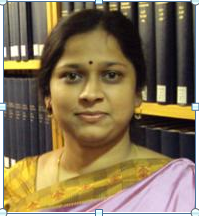
Professor of Law & Director, Centre for Cyber Laws and Forensic Sciences, NALSAR University of Law
Course Coordinator
Prof. K. V. K. Santhy has over 24 years of teaching experience in Criminal Law and completed her Doctoral research on "Penal Reforms in India" from Osmania University. She currently serves as the Proctor of NALSAR University of Law, overseeing campus discipline and student affairs.
Prof. Santhy has led and contributed to several prestigious research projects, including the Study of the Indian Penal Code from a Gender Perspective (NCW), Law on Grievance Redressal in Public Offices in A.P. (Centre for Good Governance), and the Draft Amendment to the Transplantation of Human Organs Act, 1994 (National Deceased Donor Transplantation Network). She also coordinated major studies for the Bureau of Police Research and Development (BPR&D) and the UGC on sentencing perspectives and defective investigations.
She has been associated with the Global Internet Governance and Advocacy (GIGA) initiative of the Ministry of Electronics and Information Technology and has conducted international workshops with the ICRC on International Humanitarian and Criminal Law. As part of her post-doctoral research at the Max Planck Institute for International Criminal Law, Germany, she worked on "Punishment and Sentencing" and submitted a report on "Counterfeit Drugs in India."
An accomplished author, Prof. Santhy has published books and articles on sentencing, police torture, fair trial standards, and human rights law. She is a sought-after speaker, having delivered lectures at leading institutions including NISA, CFSL, National Police Academy, NADT, and Women and Child Welfare Departments on topics such as criminal justice, cyber laws, and sentencing reforms.
Mr. Sai Manohar Aramane, IPS
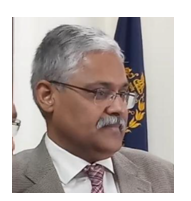
Additional Director General of Police (Intelligence), Madhya Pradesh
Mr. Sai Manohar Aramane is a 1995-batch officer of the Indian Police Service (Madhya Pradesh Cadre). Over his distinguished career spanning nearly three decades, he has served in key positions in state and central agencies, including a significant tenure with the Central Bureau of Investigation (CBI). During his deputation to the CBI, he handled several high-profile investigations related to economic offences, bank frauds, and extradition cases.
Currently serving as the Additional Director General of Police (Intelligence), Government of Madhya Pradesh, Mr. Aramane continues to play a pivotal role in strengthening intelligence operations and law enforcement coordination. His professional excellence has been recognized with the President's Police Medal for Distinguished Service and the Police Medal for Meritorious Service.
A career officer with a deep commitment to integrity and national service, Mr. Aramane is widely regarded for his expertise in investigation, intelligence management, and leadership in policing.
Sri Vamshi Krishna IPS
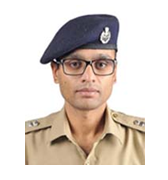
DIG, ED, Karnataka
Sri Vamshi Krishna is an Indian Police Service (IPS) officer in the Karnataka cadre. He has served as Joint Commissioner of Police (West Zone), Bengaluru City. He is described as a police officer and trainer with a strong background in cybercrime and information security.
Mr. U. Ramamohan
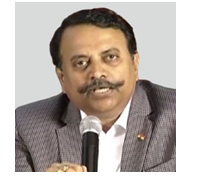
Director, Digital Forensics and Cyber Security, Truth Labs International
Mr. U. Ramamohan holds an M.Sc. in Statistics from S. V. University, Tirupati, and a Post Graduate Diploma in Computer Applications from the University of Hyderabad. A retired Superintendent of Police from Telangana and Andhra Pradesh States, he brings over 25 years of expertise in digital evidence handling and forensic analysis, having investigated more than 1000 cases as a Computer Forensic Expert with APFSL and CID.
With an additional 15 years of experience in field crime investigations, including cybercrimes, bomb, and explosive cases, Mr. Ramamohan now leads the Digital Forensics and Cyber Security division at Truth Labs International, providing expert guidance and technical insight in complex forensic investigations.
Dr. Shilohu Rao
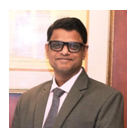
Professor, National Law University, Jodhpur
Dr. Shilohu Rao is a Professor at the National Law University, Jodhpur, where he specializes in the intersection of law and technology. With extensive experience in legal education, research, and academic administration, he has contributed significantly to developing interdisciplinary perspectives on digital governance, cybersecurity, and emerging technologies. Dr. Rao has been closely associated with several national initiatives and academic collaborations that explore the evolving relationship between technology and legal frameworks, particularly in areas like data protection, cyber law, and digital forensics.
He has been invited as a speaker and resource person at various national conferences and workshops, including joint programmes organized by NLU Jodhpur and IIT Jodhpur on "Law and Technology." Dr. Rao's teaching and research integrate contemporary issues such as artificial intelligence, blockchain, and cybercrime regulation into the broader discourse of law and policy. His academic leadership and policy engagement make him a key voice in shaping legal education and research on technology law in India.
Mr. Ram Ganesh
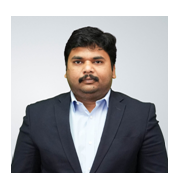
Founder and CEO of CyberEye
Ram Ganesh is the Founder and CEO of CyberEye and a distinguished expert with over 13 years of experience in Cyber Intelligence, Investigations and Digital Forensics. A Chevening Cybersecurity Fellow from Cranfield University (UK Defence Academy), he has served with leading organisations including DRDO and TCS in Cyber Security R&D and Analysis.
An international speaker, Ram is part of and has presented his work on Cyber Intelligence, Forensics and Investigations at global platforms such as Defcon US, Underground Economy - Council of Europe HQ, UN conventions (UNTOC, UN-AHC), Bsides, GC3B Geneva, Interpol's DFEG and Intersec Dubai. He has trained over 25,000 professionals across ISRO, DRDO, CBI, NIA, Armed Forces, and State Police, among others.
At NALSAR, Ram brings his extensive expertise in cybersecurity strategy, digital forensics, and cyber law enablement to strengthen interdisciplinary initiatives between law, technology, and national security.
Mr. Rajesh Gopal

Cyber Security Consultant – Lab Sessions
Rajesh Gopal is a seasoned cybersecurity and digital forensics leader with 18+ years of international experience in cyber defense, incident response, IoT/OT security, threat intelligence, and security governance for government, law enforcement, and Fortune 500–scale organizations. He currently serves as Director of IT – Cyber Security at Skillsoft Software India Pvt. Ltd., and has led high-impact security programs across critical sectors including BFSI, semiconductor, aerospace, telecom, and heavy industry.
He has directed global incident response and complex cybercrime investigations, advised on national-level security transformation, built and matured Security Operations Centers, and driven compliance across frameworks such as SOX, PCI DSS, ISO 27001, FedRAMP, StateRAMP, and ISO 17025. A founder, consultant, and adjunct professor, he is also recognized for delivering 2000+ hours of expert training to enterprises, government, and law enforcement on advanced cyber operations, digital forensics, and financial fraud.
